 By
By
What does it mean to digitize a business?
Digitizing a business means converting processes that were previously paper-based, in-person, or manual into a digital format.
In the case of an automotive wholesaler or dealership, this involves:
-
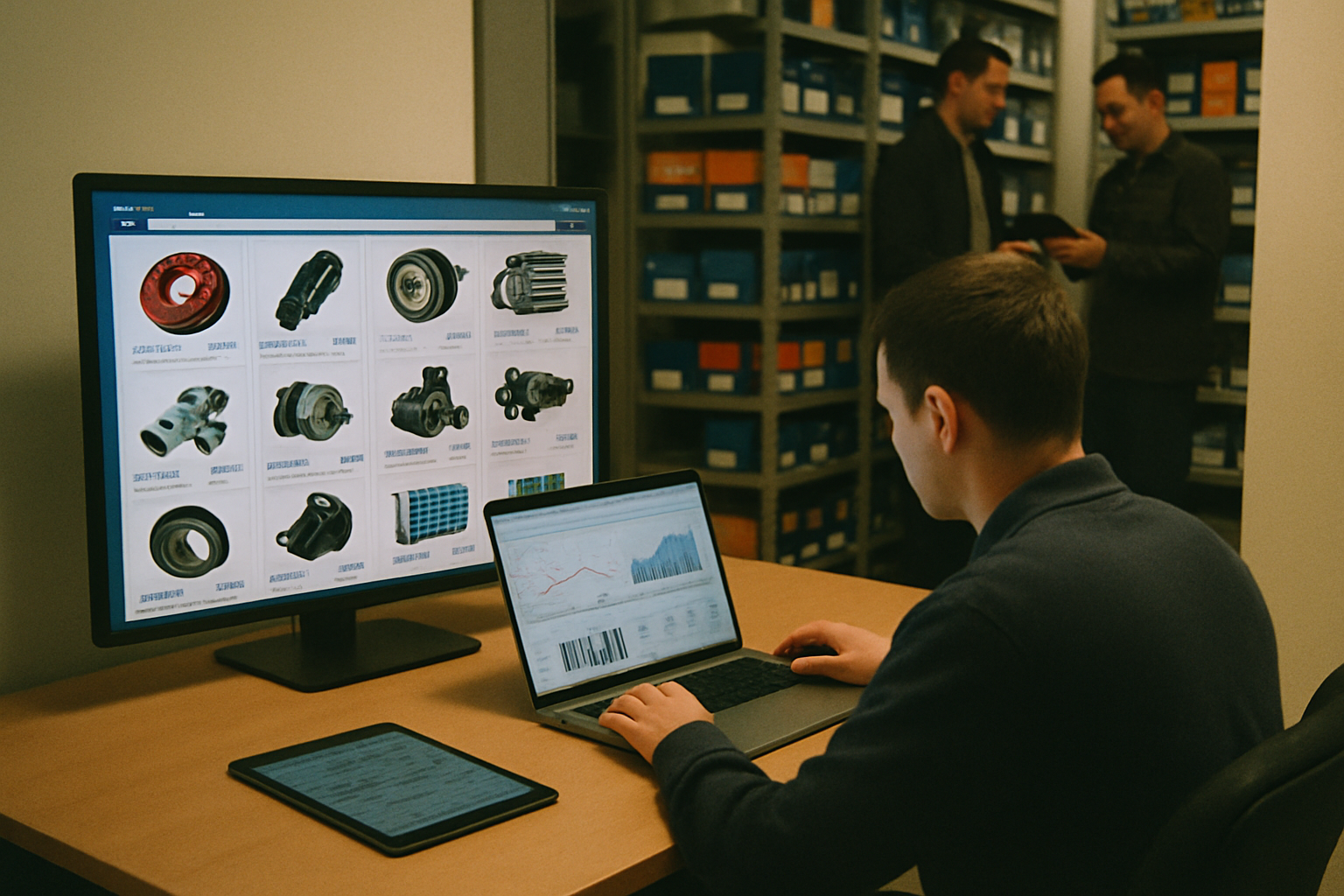
Having an up-to-date online product catalog (filters, brakes, shock absorbers, etc.).
-
Automatically registering and updating stock, prices, and compatibility for each part.
-
Managing orders, shipments, and invoicing through connected tools.
-
Measuring and analyzing sales, logistics, and customer service results to continuously improve.
Therefore, digitizing is not just “having a website”, but transforming the way the operation works, reducing time, errors, and unnecessary costs.
How to start the digitization process?
Five steps to guide the digitization of the wholesale channel within a dealership:
1. Inventory and classify stock
-
List all products, parts, accessories, brands, and compatible models.
-
Classify by category, brand, vehicle segment, and status (in stock, in transit, replenishment).
-
This database is essential to digitize information.
2. Digitize the product catalog
-
With organized data, create an online catalog with descriptions, photos, compatibility, pricing, and real-time stock.
-
This allows wholesale customers to find what they need without relying on in-person service.
3. Connect sales and distribution channels
-
Integrate the dealership/wholesaler with digital channels such as its own online store, marketplaces (e.g., Mercado Libre or Amazon), and distributor networks.
-
This makes it possible to sell to distributors, official stores, and end customers simultaneously.
4. Automate order, inventory, and shipping management
Implement tools that automatically update inventory after each sale, alert low stock levels, generate shipping and invoicing orders, and allow delivery tracking to the final customer.
5. Monitor results and adjust operations
Use dashboards and analytics tools to identify best-selling products, most profitable channels, margins, and logistics bottlenecks. With this data, suppliers, inventory levels, and delivery models can be optimized.
How Alephee enhances each stage
The Alephee platform offers features designed specifically for automotive wholesalers and distributors, supporting the entire digitization journey.
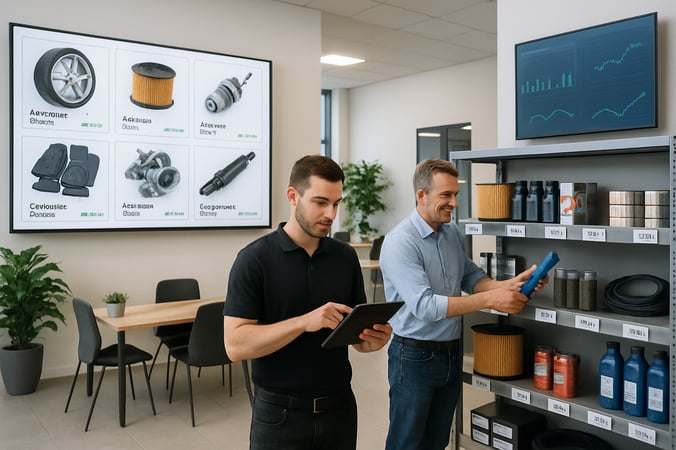
Digital product catalog: Create and manage an auto parts catalog with compatibility, images, and structured technical data.
Integration with e-commerce and marketplaces: Connect online stores and marketplaces without building separate integrations.
Order portal for the commercial network: Offer distributors a customized portal to place orders based on your catalog and stock.
Real-time business intelligence: Access sales, supply, inventory, and performance metrics for data-driven decisions.
Automation and traceability: Connect inventory, orders, sales, and shipping in a single platform, reducing errors and ensuring full traceability.
Benefits for wholesalers and distributors
Lower investment to scale: Sell more without opening new physical locations.
Better customer service: Faster deliveries, accurate stock information, and fewer order errors.
Scalability: Support higher sales volumes without proportional cost increases.
Channel diversification: Sell beyond the physical counter to distributors, workshops, official stores, and end customers.
Complete operational transformation: Digitizing wholesale operations is a strategic step to remain competitive.
It is not just about being online, but transforming the entire operation: catalog, inventory, orders, sales, and analytics.
With a platform like Alephee, this process becomes organized, technical, and scalable.
In the end, it is not just about “selling more”, but about selling better with less effort, fewer errors, and higher margins.
-1.png)